August 13, 2026 | Image by Pexels.com July 2026 was not just another hot month in the United States. It was the hottest month ever recorded. The average temperature across the Lower 48 reached 76.89°F (24.94°C), beating the previous record set during the Dust Bowl in July 1936. Every state in the contiguous United States recorded temperatures above its 20th century average, with some of the most extreme heat affecting the Mountain West, Southwest, Northern Plains, and the Southeast. Heat on this scale carries risk wherever it occurs. In construction, that risk cuts two ways: it endangers the workers on site and threatens the operations of the companies employing them. Extreme Heat Is A Safety And Operational Risk For construction companies, the most immediate concern during periods of extreme heat is protecting workers from heat-related illnesses. The Centers for Disease Control and Prevention (CDC) notes that excessive heat can cause heat exhaustion, heat stroke, dehydration, and other serious health problems. These risks can become even more consequential in construction, where workers may spend long periods of time outdoors performing physically demanding work. Heat can also affect a worker’s ability to perform those tasks safely. Fatigue, dehydration, and heat stress can make it more difficult to maintain concentration and respond effectively to hazards. When work involves machinery, elevated surfaces, moving materials, or other high-risk activities, even a decline in alertness can have serious consequences. The impact of heat on construction is reflected in occupational injury and fatality data. According to the Center for Construction Research and Training (CPWR), construction workers account for roughly 7% of the U.S. workforce but have experienced more than one-third of occupational heat-related deaths in recent years. That disproportionate impact underscores how directly construction work is exposed to extreme heat and why managing heat risk is a particularly important challenge for the industry. The consequences also extend beyond individual health and safety incidents. CPWR also notes that heat exposure can affect productivity, project schedules, medical expenses, and the number of hours workers are able to spend on the job. Reducing that risk starts well before a worker steps onto the site; it depends on knowing, with enough lead time and enough precision, when conditions at that specific location are about to turn dangerous. Heat Changes How Construction Work Gets Done Protecting workers from extreme heat can require changes in how and when work gets done. A supervisor may need to schedule physically demanding work during the cooler parts of the day. They may also introduce additional rest and hydration breaks, adjust staffing, increase monitoring, or change the sequence of tasks. In more severe conditions, work may need to be delayed or stopped altogether. These decisions are necessary components of a safe workplace but they can also create operational complications, too. A change to one part of a project can have a ripple effect, impacting many other operational variables including labor planning, equipment utilization, subcontractor schedules, material deliveries, and deadlines. For a contractor managing multiple projects, these challenges can compound quickly. A few lost hours at one site may not seem so significant on their own, but repeated disruptions across dozens of jobsites can have a much larger impact. The challenge for construction leaders, then, is not simply responding when extreme heat becomes dangerous. It is anticipating how conditions are likely to develop early enough to make informed decisions about the workday. The Weather Forecast Is Only Useful If It Reflects The Conditions at a Jobsite Most construction companies already have access to weather information. Project managers can check a weather app, review numerous regional forecasts, and receive alerts when extreme heat is expected. The challenge lies in translating that information into what it means for a specific jobsite. A project near the coast may experience very different conditions from a project farther inland, even if both fall under the same general heat advisory. Southern California provides a useful example. During the July 2026 heat events, Cal/OSHA issued warnings to employers across Southern California as temperatures were expected to reach triple digits in several inland areas. The agency had reminded employers of the need to provide water, shade, cooling areas, rest breaks, training, and procedures for recognizing and responding to heat illness. 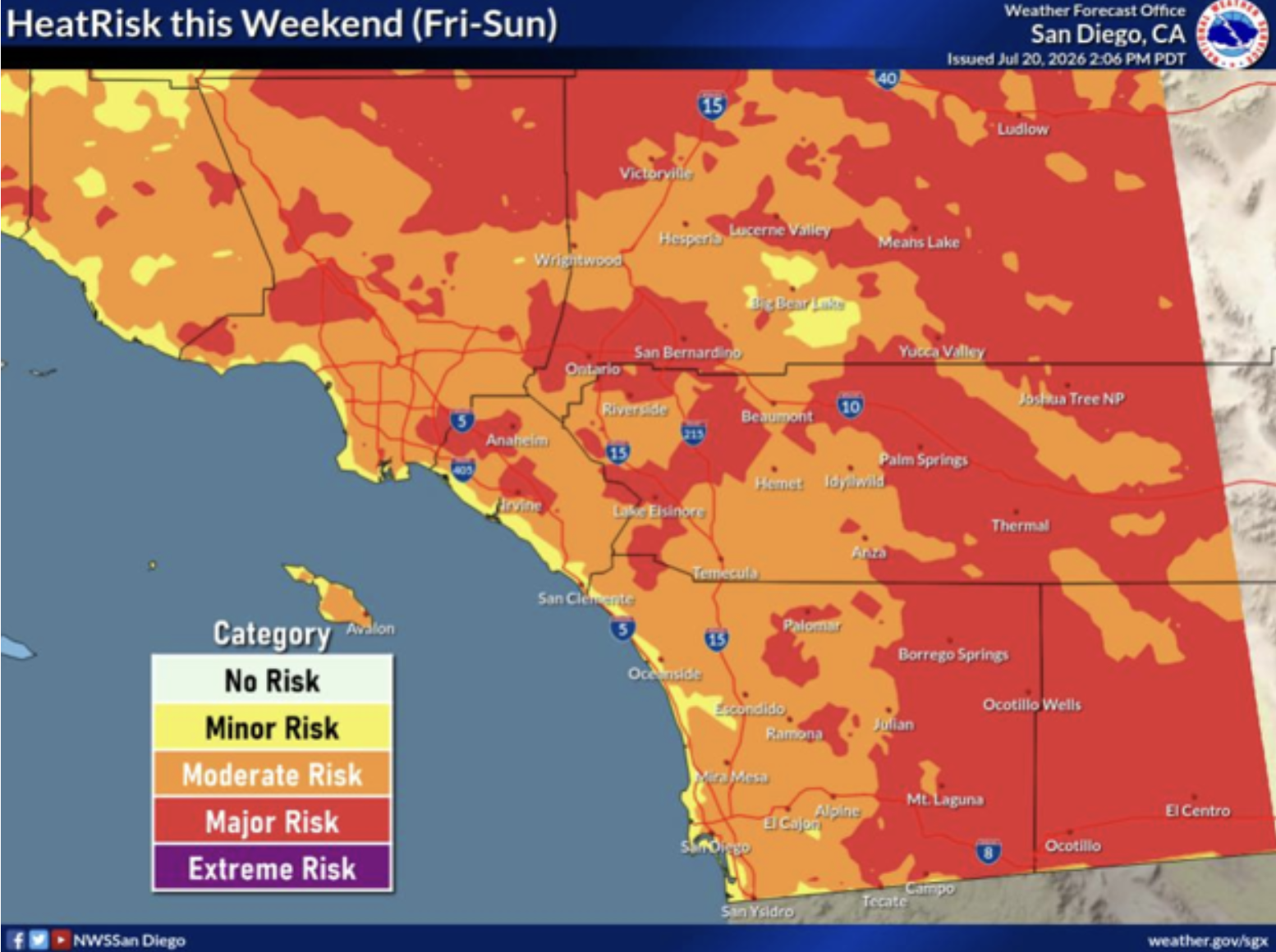 Image Sourced from weather.gov Those measures provide an important framework for protecting workers, but they do not eliminate the challenge of knowing when and where hazardous conditions will develop. For construction teams, the missing piece is often not access to weather information, but access to weather information precise enough to support decisions at the jobsite level. This is where tools like Benchmark Labs’ SafeCast come into play. SafeCast provides construction teams with point-specific forecasts and real-time weather alerts designed to give project and safety leaders a clearer picture of the conditions at the locations where their crews are working. Rather than relying solely on a broad regional forecast, project teams can use more localized weather information to better understand how conditions are expected to develop at a specific site. That visibility can help teams anticipate periods of elevated heat and make informed decisions about how to plan the workday. Instead of treating a broad heat forecast as a “one-size-fits-all” indicator, construction teams can use localized information to determine where additional precautions may be needed and when conditions are likely to become more challenging. That can give project and safety leaders more time to act before extreme heat begins to disrupt work. As extreme heat continues to challenge the construction industry, knowing that a heat wave is coming is only part of the equation. If you’re interested in learning more about SafeCast and Benchmark Lab’s suite of products tailored to supporting construction operations, please contact us for more details.
How Point-Specific Weather Intelligence Can Help Construction Manage Extreme Heat